USA Tennis Courts: A History of the Game and a Guide to Its American Future
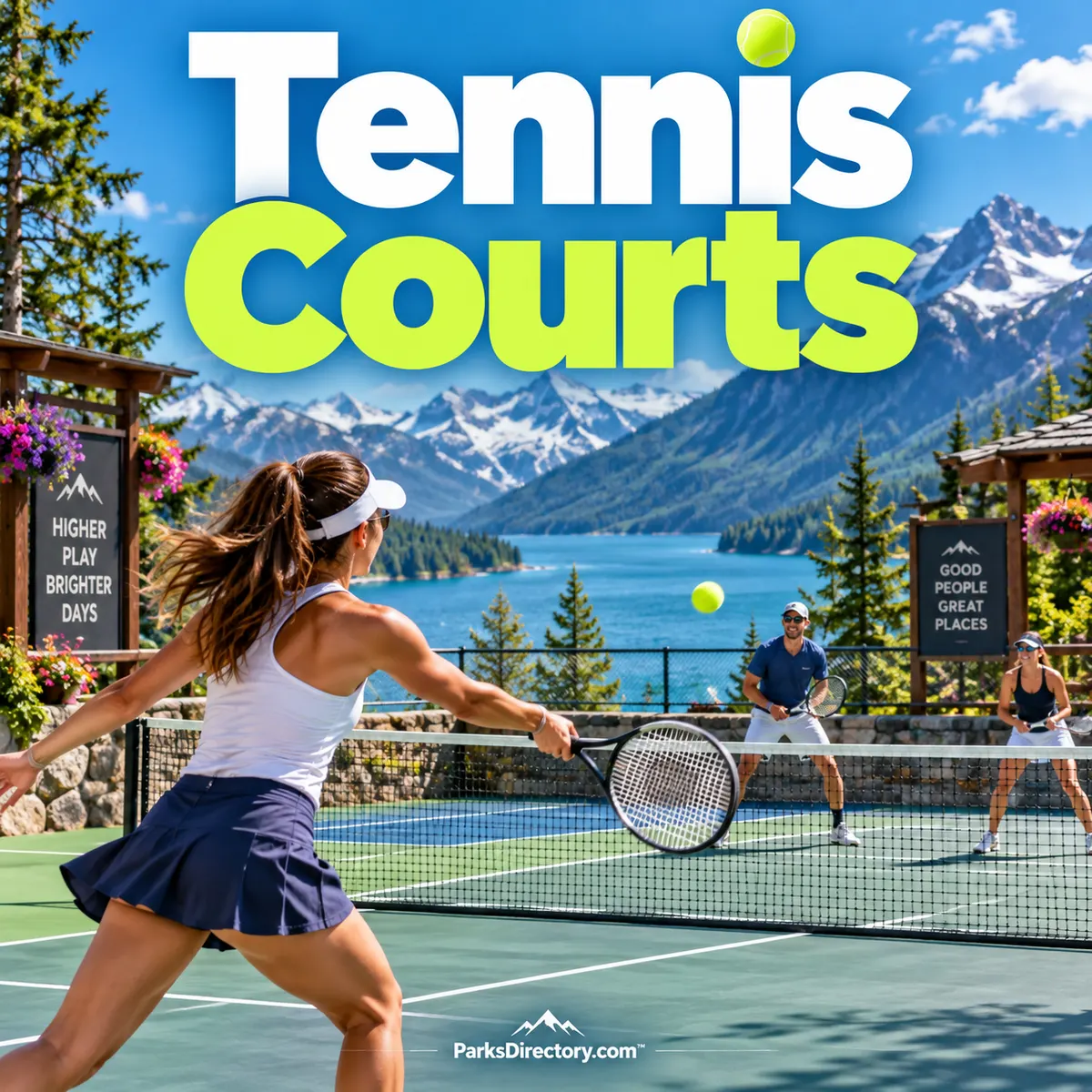
A tennis court contains a surprisingly broad range of American experiences. It can be a neighborhood meeting place, a school competition venue, a first lesson for a child, or the setting for a demanding adult league match. The white lines remain familiar, but the people using them bring different ambitions. Some want competition; others want a reliable reason to get outside and spend time with friends.
Finding USA tennis courts should begin with those personal priorities rather than a photograph of a famous stadium. ParksDirectory™ offers a starting point for exploring the category. Before making plans, confirm the facility’s current access rules, reservation system, surface, and programs. A convenient public court with a welcoming group can be more valuable to a developing player than an impressive venue that is difficult to use.
The origins of tennis and its arrival in America
Tennis has older European roots than its modern outdoor image suggests. The indoor game often called real tennis developed long before today’s lawn tennis, using a different playing environment and rules. During the nineteenth century, lawn tennis emerged as a more portable outdoor sport. The International Tennis Hall of Fame distinguishes that development from the much older game, an important reminder that tennis evolved rather than appearing fully formed.[1]
Mary Ewing Outerbridge is widely credited with helping introduce lawn tennis to the New York area in 1874 after encountering it in Bermuda. The Hall of Fame notes that competing introduction claims exist, so describing her as an important pioneer is more accurate than declaring an uncontested single American inventor. Her association with Staten Island illustrates how travel and social networks helped carry the new game across the Atlantic.[2]
Organized competition followed quickly. The first U.S. National Lawn Tennis Championship took place at the Newport Casino in Rhode Island in 1881, beginning the championship history that eventually became the US Open. Newport’s early role connects American tennis with the social institutions of its period, while the tournament’s later development shows how a comparatively small competition could grow into a major public sporting occasion.[3]
Opening a sport that did not welcome everyone equally
American tennis history cannot be told only through trophies and attractive clubs. Althea Gibson’s career demonstrates the barriers Black players faced and the importance of opportunities outside exclusionary institutions. In 1950 she became the first Black player to compete in the U.S. National Championships. Her later major titles, including the U.S. championships in 1957 and 1958, made that breakthrough impossible to dismiss as symbolic alone.[4]
The expansion of women’s opportunity also changed the sport’s public meaning. Billie Jean King’s highly publicized victory over Bobby Riggs in the 1973 “Battle of the Sexes” brought questions of gender and athletic respect to a vast public conversation. The USTA’s account situates the Houston event within the history of the game rather than treating it as an ordinary exhibition match.[5]
These histories matter when evaluating today’s public tennis courts. A nominally open gate is not the same as equal opportunity to learn, obtain equipment, or find a suitable session. Community programs should make the route from curiosity to participation visible. An inviting notice about beginner lessons or loaner rackets can do more for access than a general statement that everybody is welcome.
Tennis popularity in the USA, past and present
Tennis has moved far beyond the early championship’s limited circle, although public participation should not be measured solely through professional audiences. Watching elite players and booking a neighborhood court are related but different activities. The stronger indicator of recreational demand is how many people play, how frequently they return, and whether local facilities can serve them consistently.
In February 2026, the USTA reported 27.3 million U.S. tennis participants in 2025, an increase of 1.6 million over 2024. It described six consecutive years of growth and a 54 percent increase since 2019. These are national participation estimates, not a count of people holding club memberships or competing in sanctioned tournaments.[6]
The public-park connection is especially significant. In an August 2026 announcement about recreation technology, the USTA reported that nearly 40 percent of tennis players played in public parks. The figure helps explain why park maintenance and straightforward booking deserve attention alongside televised competitions. The everyday health of the sport depends heavily on places that many residents can reach and afford.[7]
Choosing between hard, clay, grass, and indoor courts
Court surfaces influence the playing experience. Hard courts provide a different footing and bounce from clay, where the loose surface generally slows play and changes movement. Grass brings another set of characteristics. The Lawn Tennis Association’s surface guide explains these distinctions and emphasizes that players need to adjust their movement rather than assume that habits transfer unchanged between surfaces.[8]
For a recreational visit, surface condition is at least as important as the category. Ask about maintenance, inspect the area for obvious hazards, and follow the operator’s closure decisions after weather. Choose footwear suited to the facility’s requirements. A surface advertised as premium is not automatically suitable for every player or usable under every condition.
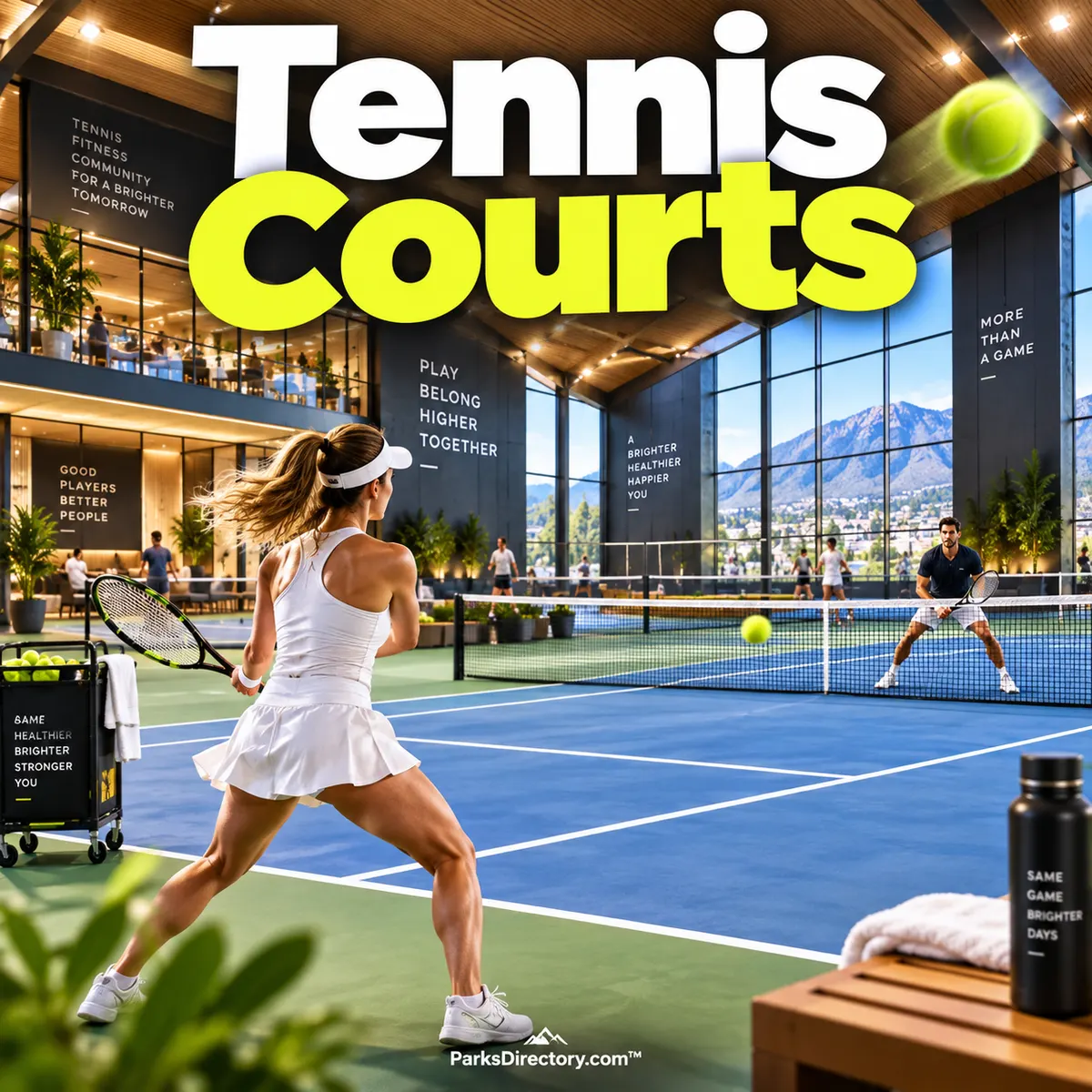
Indoor tennis courts can make scheduling more predictable, but the booking price should be compared carefully. Check whether lighting, guest access, and any required membership are included, and confirm the length of the reservation. Public outdoor facilities may be inexpensive or free at certain times, yet still require permits or organized rotations. There is no nationwide access rule that applies to every American tennis court.
Making a first visit or a return to tennis worthwhile
Players searching for tennis courts near me often need a playing partner as much as a location. Look for introductory classes, supervised social sessions, or leagues with clearly described ability levels. Ask whether the program assumes previous match experience. Returning after a long break is different from arriving as a complete beginner, and a useful organizer will help distinguish those needs.
Start with a manageable plan. A short session focused on rallying may be more enjoyable than an ambitious match before the group understands its abilities. Agree on whether the goal is practice or competition, establish a finish time, and leave room to learn. Progress is easier to recognize when everyone knows what the session is intended to accomplish.
Court etiquette helps different groups share limited space. Wait for a break before walking behind an active court, keep equipment outside the playing area, and release a reservation you cannot use. Do not treat empty neighboring courts as automatically available for a lesson or extra practice. Clear boundaries and respect for the posted schedule reduce conflicts without requiring constant staff intervention.
The economic impact of tennis in the United States
The tennis economy is larger than professional prize money. Local activity supports teaching professionals, court contractors, maintenance crews, sporting-goods retailers, stringing services, tournament organizers, and club employees. Visiting competitors may also purchase lodging, meals, and transport. These spending channels explain why a well-managed court complex can contribute to its surrounding business community even without hosting a major international event.
However, national participation growth is not itself a dollar estimate. A person borrowing a racket at a free public court has a different spending pattern from a year-round club member traveling to tournaments. Without a consistent methodology, combining equipment purchases, facility revenue, and tourism estimates can double-count activity. A credible economic discussion should distinguish direct sales, employment, wider effects, and costs instead of producing an impressive but unsupported total.
Public facilities also create benefits that user-fee revenue does not fully describe. An affordable court offers recreation without requiring residents to purchase an extensive membership. That does not eliminate costs: surfaces, nets, fences, drainage, and lighting need attention. A responsible budget considers the full service life of the facility rather than assuming that construction funding solves the maintenance problem.
For communities evaluating an event, ask whether visitors are genuinely arriving because of the tournament and whether spending reaches nearby businesses. Also consider staffing, security, scheduling disruption, and resident access during preparation. A tournament can be valuable without every promotional claim being correct. The strongest arrangements explain both the opportunities and the commitments before public resources are assigned.
Preserving tennis access as recreation needs change
Tennis courts increasingly sit within broader discussions about how communities allocate recreation space. Rather than assuming one activity should always displace another, managers should measure use at different times, consult residents, and examine alternatives. An apparently quiet weekday court may serve a strong after-school program or become busy when nearby workers finish their day.
Shared programming can be useful where the layout, surfaces, and schedules genuinely support it. Nevertheless, changes should come with clear information about court markings, equipment storage, reservations, and the needs of each user group. A compromise that looks efficient on a site plan can become frustrating when nobody knows which activity has priority. Transparent rules are part of the facility, not an administrative extra.
Access also involves routes, seating, toilets, and communication. Describe the actual conditions rather than applying an unsupported blanket label such as fully accessible. Offer a way to ask questions before arrival, and make online information consistent with signs at the site. Families arranging lessons, visitors with mobility needs, and people unfamiliar with local permit systems all benefit from those details.
The future of USA tennis courts
The recent participation increase creates an opportunity, not a guarantee of lasting success. The next challenge is helping new and returning players build a routine. Good instruction, affordable equipment options, suitable partners, and dependable court time turn occasional interest into regular recreation. Investment should support that whole pathway rather than focus exclusively on facilities that photograph well.
Future planning should also account for comfortable playing conditions and resilient maintenance. Shade outside the court, sensible lighting, drainage, and water-conscious landscape choices can improve how a site serves its community. Reservation technology may reduce confusion, but public operators should retain understandable alternatives for people who cannot navigate an app. Convenience should broaden access rather than create a new barrier.
From nineteenth-century introductions to contemporary neighborhood play, American tennis has repeatedly changed who participates and where the game belongs. Explore that continuing story through ParksDirectory™, then check current facility details and choose a court that fits your needs. The most promising future for tennis is not simply more courts on a map. It is more people who can use them, enjoy them, and feel that the game has a place in their lives.
Sources
International Tennis Hall of Fame, “(Real) Tennis Anyone? A Short History of the Royal and Ancient Game of Tennis.” https://www.tennisfame.com/blog/2018/6/real-tennis-anyone-a-short-history-of-the-royal-and-ancient-game-of-tennis ↩︎
International Tennis Hall of Fame, Mary Outerbridge biography; notes competing claims concerning the sport’s American introduction. https://www.tennisfame.com/hall-of-famers/inductees/mary-outerbridge ↩︎
International Tennis Hall of Fame, tournament history and the first U.S. National Lawn Tennis Championship. https://www.tennisfame.com/tournament-winner-history ↩︎
International Tennis Hall of Fame, Althea Gibson biography. https://www.tennisfame.com/hall-of-famers/inductees/althea-gibson ↩︎
USTA Texas, “History on the Line: Battle of the Sexes.” https://www.usta.com/en/home/stay-current/texas/history-on-the-line--battle-of-the-sexes.html ↩︎
USTA, “Tennis Participation Continues to Surge with Six Consecutive Years of Growth, Reaching 27.3 Million Players in 2025,” February 18, 2026. https://www.usta.com/en/home/stay-current/national/tennis-participation-continues-to-surge-with-six-consecutive-yea.html ↩︎
USTA, “USTA Ventures and Rec Bring Modern Technology to the Millions Who Play Tennis in Public Parks,” August 6, 2026. https://www.usta.com/en/home/stay-current/national/usta-ventures-and-rec-bring-modern-technology-to-the-millions-wh.html ↩︎
Lawn Tennis Association, tennis court surface guide. https://www.lta.org.uk/play/tennis-tips-and-techniques/hard-clay-grass-and-astroturf-tennis-court-surface-guide/ ↩︎