USA NBA Teams: Basketball History, Arena Experiences, and Billion-Dollar Values
An NBA game combines a compact playing surface with an enormous commercial and cultural reach. Supporters can follow a team through television, digital highlights, neighborhood conversations, or an evening inside its arena. The business operates at a multibillion-dollar scale, but the attachment often begins with something smaller: a favorite player, a family tradition, or pride in a place.
For readers researching USA NBA teams through ParksDirectory™, an arena visit offers a useful way to connect those layers. The goal is not simply to purchase a seat. It is to understand the franchise, plan an enjoyable outing, and recognize how professional basketball fits within the wider history of the American game.
Basketball’s invention and the roots of the NBA
The sport began in Springfield, Massachusetts, in 1891, when Canadian-born James Naismith developed an indoor game for students. Springfield College’s account connects the invention with a practical educational challenge: creating an activity that would keep people engaged during winter. Professional basketball would eventually become a major entertainment business, but its origin was rooted in participation and physical education.[1]
The NBA itself developed much later. The Basketball Association of America began in 1946, while the National Basketball League was already operating. In 1949, the rival organizations combined to form the National Basketball Association. Their histories involved different markets and venues, making the merger both a sporting and commercial consolidation rather than the invention of basketball itself.[2]
Success was not inevitable. The league went through an early period of contraction and limited support before later expansion. One important change was the introduction of the 24-second shot clock in 1954. The Basketball Hall of Fame credits Syracuse Nationals owner Danny Biasone with the idea, which encouraged a faster game by limiting how long a team could hold possession without attempting a shot.[2:1][3]
That episode offers a useful perspective on the present. Professional sports traditions are not necessarily frozen rules inherited intact from their beginnings. The NBA’s history includes deliberate changes intended to improve competition and the spectator experience. Understanding that history makes contemporary debates about presentation, pace, and scheduling less surprising.
Local franchises within a wider basketball culture
The NBA has 30 teams, with 29 based in the United States and the Toronto Raptors in Canada.[4] The franchise estimates discussed here cover the entire league, including Toronto. A USA-centered travel article should preserve that distinction instead of treating every NBA location as domestic or describing a league-wide total as a U.S.-only figure.
For supporters, a team can function as a continuing local story. Players and coaches change, but colors, memories, and familiar game-night routines can connect successive generations. That continuity does not eliminate disagreement about ownership decisions or ticket prices. It explains why people may care intensely about a franchise even during seasons when its competitive results disappoint them.
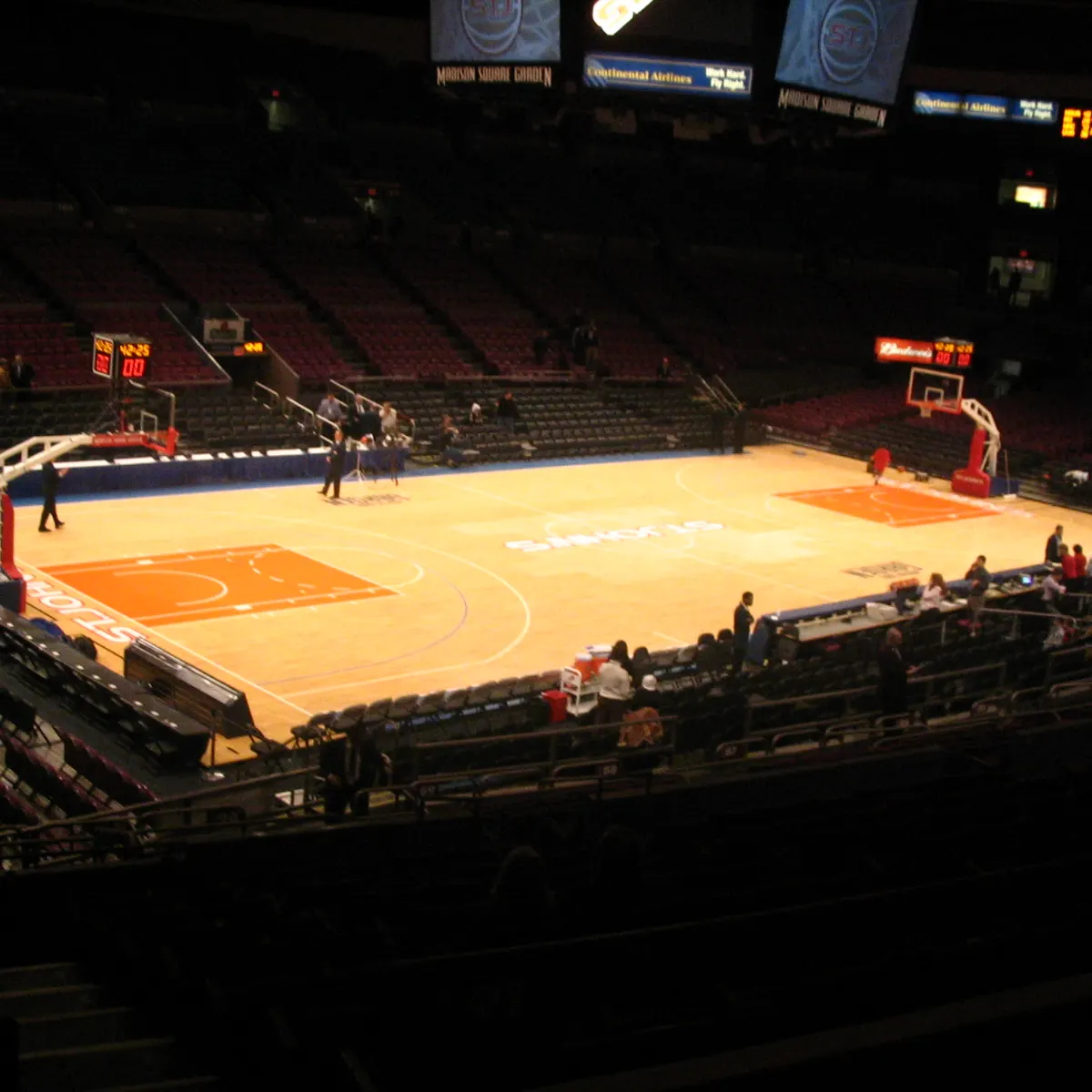
The arena is where that relationship becomes a physical event. Its location affects arrival, nearby dining, and the possibility of combining a game with other activities. A visitor should consider the whole evening, not only the view from a particular seat. Convenient transport and time to explore can make a modestly priced outing more satisfying than a premium ticket attached to difficult logistics.
Popularity from early uncertainty to major audiences
The early NBA’s struggle for support contrasts with the scale of modern attendance. Reuters reported a record 22,536,341 regular-season admissions in 2023–24. The number illustrates the league’s ability to attract substantial in-person audiences, but it counts admissions rather than distinct people. A returning season-ticket holder contributes repeatedly to that total.[5]
Attendance again exceeded 22.18 million in 2025–26, according to the NBA.[6]
Those measures describe only part of popularity. A fan who watches remotely, buys no ticket, and follows a player rather than a local team may still be deeply engaged. Conversely, attending once does not establish lifelong support. Analysts should identify whether they are measuring ticketed demand, viewing, purchases, or participation before claiming that one number captures the entire basketball audience.
For an American community, professional visibility can be an invitation to play, but it is not a substitute for accessible courts and affordable programs. The arena and the neighborhood gym serve different purposes. A healthy basketball culture would allow the excitement of the professional game to coexist with opportunities for beginners who may never pursue competitive careers.
What are NBA franchises worth?
Forbes’ 2025 NBA valuation edition, published in October 2025 and updated in January 2026, estimated the average team at $5.4 billion. The Golden State Warriors led at approximately $11 billion, with the Los Angeles Lakers at $10 billion and the New York Knicks at $9.75 billion. These are dated estimates, not continuously updated market prices.[7]
Using the rounded average, 30 multiplied by $5.4 billion produces an approximate $162 billion combined franchise-value benchmark. Forbes describes the collective total as just over $160 billion; the small difference reflects rounding. The benchmark includes Toronto and is not an additional valuation of the league office that should be added to the teams’ estimated worth.[7:1]
Valuation is different from annual revenue, operating income, or cash available to owners. A buyer considers expectations about future earnings, commercial arrangements, scarcity, and the terms of the transaction. Debt and ownership rights can affect what a particular stake is worth. A minority investment and the acquisition of control may therefore carry different implications even when both generate a headline about the same franchise.
Read the rankings as a commercial comparison, not a measure of which supporters matter most. For a visitor choosing a game, the price of a franchise is far less useful than the seating view, the complete outing cost, and the ease of reaching the arena. A memorable basketball evening does not require choosing the league’s most expensive business.
Media rights and the business behind the arena
The NBA’s national media agreements provide one reason for the scale of its commercial expectations. The league announced 11-year arrangements with Disney, NBCUniversal, and Amazon Prime Video beginning in 2025–26 and extending through 2035–36. The official announcement describes a distribution framework spanning established television and streaming services.[8]
For the business, multi-year agreements can support planning beyond a single season. For viewers, the practical effect is a need to understand where a particular game is available. More distribution channels do not automatically mean a simpler experience. Clear schedules and understandable viewing options are important if the league wants occasional viewers to become regular followers.
Arenas create another set of commercial relationships. Ticketing, premium seating, concessions, partnerships, and venue arrangements can affect a franchise differently depending on its contracts and facilities. The key point is that a basketball team is not funded by the scoreboard alone. Its financial position reflects an interconnected set of rights and obligations that visitors rarely see directly.
The economic impact of NBA teams in the USA
NBA events can support spending on hospitality, transport, staffing, and local services. An arena may also host other kinds of events, depending on its operating arrangements. These activities can create visible benefits for nearby businesses, but a serious economic analysis should distinguish the basketball franchise from the building and from any surrounding real-estate development.
Research reviewed by the Federal Reserve Bank of St. Louis warns that sports-facility spending does not automatically produce large net gains for an entire metropolitan economy. Residents may substitute game spending for other entertainment, while public financing carries opportunity costs. Those cautions remain relevant even when an arena district is lively on event nights.[9]
The distribution of activity matters. Some restaurants may gain customers, while other businesses face congestion or operating challenges. Event work can provide income without necessarily supplying stable year-round employment. Assessing those details is more useful than multiplying a crowded evening into a sweeping claim about regional prosperity.
Franchise value should also remain separate from community benefit. An increase in a team’s estimated sale value is primarily an asset-value change for its owners. It does not measure additional wages, public revenue, or improvements in local recreation. A balanced discussion can recognize professional basketball’s commercial strength while still asking whether public commitments are justified and transparently explained.
Planning a game-night experience
Begin with official team and arena information. Confirm the game, the actual venue, entry policies, accessibility services, and transport options before purchasing travel. A familiar arena nickname or an older guide may not reflect the information needed for the date of the visit. Specific operational questions are best resolved with the responsible venue.
Choose seats in relation to the group’s priorities. An overall view of the court, easier access to facilities, or a convenient exit may matter more than proximity to the action. Set a budget for the entire outing, including transport and meals, rather than allowing the ticket price to conceal the rest of the cost.
Give first-time visitors room to enjoy the event without needing to understand every tactical detail. The movement, sound, and shared reactions can provide an engaging introduction. For more experienced fans, watching positioning away from the ball offers a different experience from following a broadcast camera. Both approaches can make an arena visit worthwhile.
The future of American NBA fandom
The NBA’s future will depend on more than franchise appreciation. Convenient viewing, affordable opportunities to attend, and strong relationships with local supporters can help sustain interest through changing rosters and media habits. Expansion or venue proposals should be treated as proposals until formally confirmed, and evaluated through their specific commitments rather than speculative enthusiasm.
At the community level, the best future keeps the professional spectacle connected with everyday basketball. A city can enjoy a world-class team while still asking for reliable neighborhood courts and welcoming youth programs. Those goals complement each other when neither is used as an excuse to neglect the other.
Use ParksDirectory™ to begin exploring NBA destinations, then verify the practical details through official sources. Professional basketball has traveled far from its early institutional roots and uncertain league years. Its lasting appeal remains the combination of exceptional play and shared attachment—a business of enormous value built around a game people still recognize on a local court.
Sources
Springfield College, “The Birthplace of Basketball.” https://springfield.edu/about/birthplace-of-basketball ↩︎
HISTORY, “NBA Is Born,” BAA/NBL origins and the 1949 merger. https://www.history.com/this-day-in-history/august-3/nba-is-born ↩︎ ↩︎
Naismith Memorial Basketball Hall of Fame, “Danny Biasone.” https://www.hoophall.com/hall-of-famers/danny-biasone ↩︎
National Basketball Association, official team directory. https://www.nba.com/teams ↩︎
Reuters, “NBA Sets All-Time Regular-Season Attendance Record,” April 15, 2024. https://www.reuters.com/sports/nba-sets-all-time-regular-season-attendance-record--flm-2024-04-15/ ↩︎
NBA, “NBA Sets Multiple Viewership Highs During 2025–26 Regular Season,” attendance section, April 2026. https://www.nba.com/news/nba-viewership-highs-2025-26-season ↩︎
Forbes, “The Most Valuable NBA Teams 2025,” updated January 8, 2026. Approximate $162 billion is calculated from the rounded average for all 30 franchises. https://www.forbes.com/sites/justinteitelbaum/2025/10/23/the-most-valuable-nba-teams-2025/ ↩︎ ↩︎
NBA Communications, 11-year media agreements announcement, July 24, 2024. https://pr.nba.com/nba-walt-disney-company-nbcuniversal-amazon-prime-video-media-agreements/ ↩︎
Federal Reserve Bank of St. Louis, “The Economics of Subsidizing Sports Stadiums.” https://www.stlouisfed.org/publications/page-one-economics/2017/05/01/the-economics-of-subsidizing-sports-stadiums ↩︎