USA Hot Springs: Natural History, American Spa Culture, and Responsible Travel
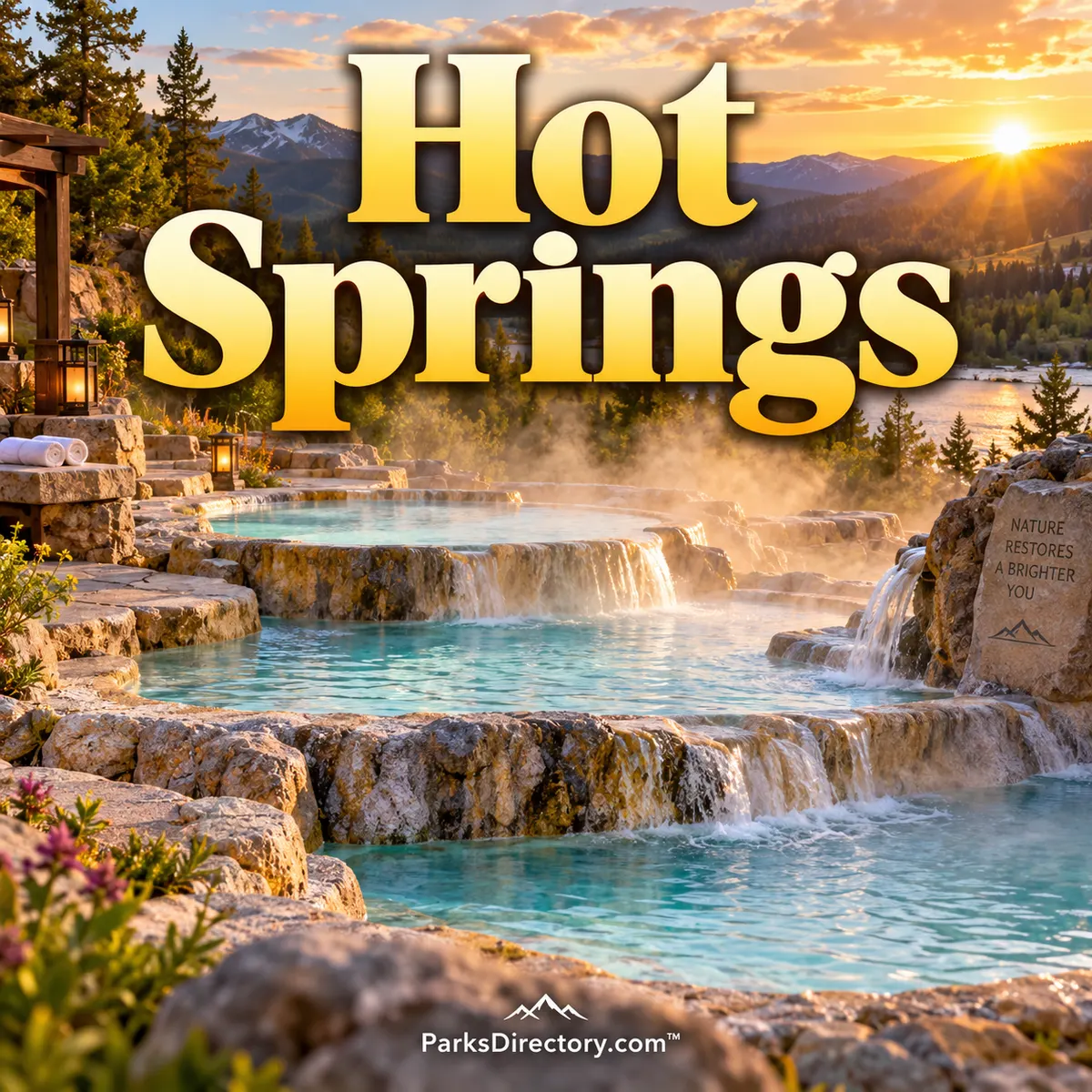
Hot springs connect travel with something happening far below the surface. A quiet pool may be the visible endpoint of groundwater moving through rock, collecting heat, and returning through fractures. The experience can feel immediate and simple, yet the setting carries a much longer story involving geology, human settlement, bathing traditions, and the management of a shared natural resource.
Readers exploring USA hot springs through ParksDirectory™ should begin with an important distinction: a thermal feature is not automatically a bathing destination. Some springs supply managed pools, some are protected features intended only for viewing, and others have access conditions that require careful verification. Understanding those differences is essential to a worthwhile American hot springs trip.
What creates a natural hot spring?
Hot springs form where heated groundwater reaches the surface. The heat source and water pathway vary by location. The U.S. Geological Survey explains that the waters at Hot Springs National Park in Arkansas are warmed through circulation below ground and the normal increase in temperature with depth. A nearby active volcano is not required for every thermal spring.[1]
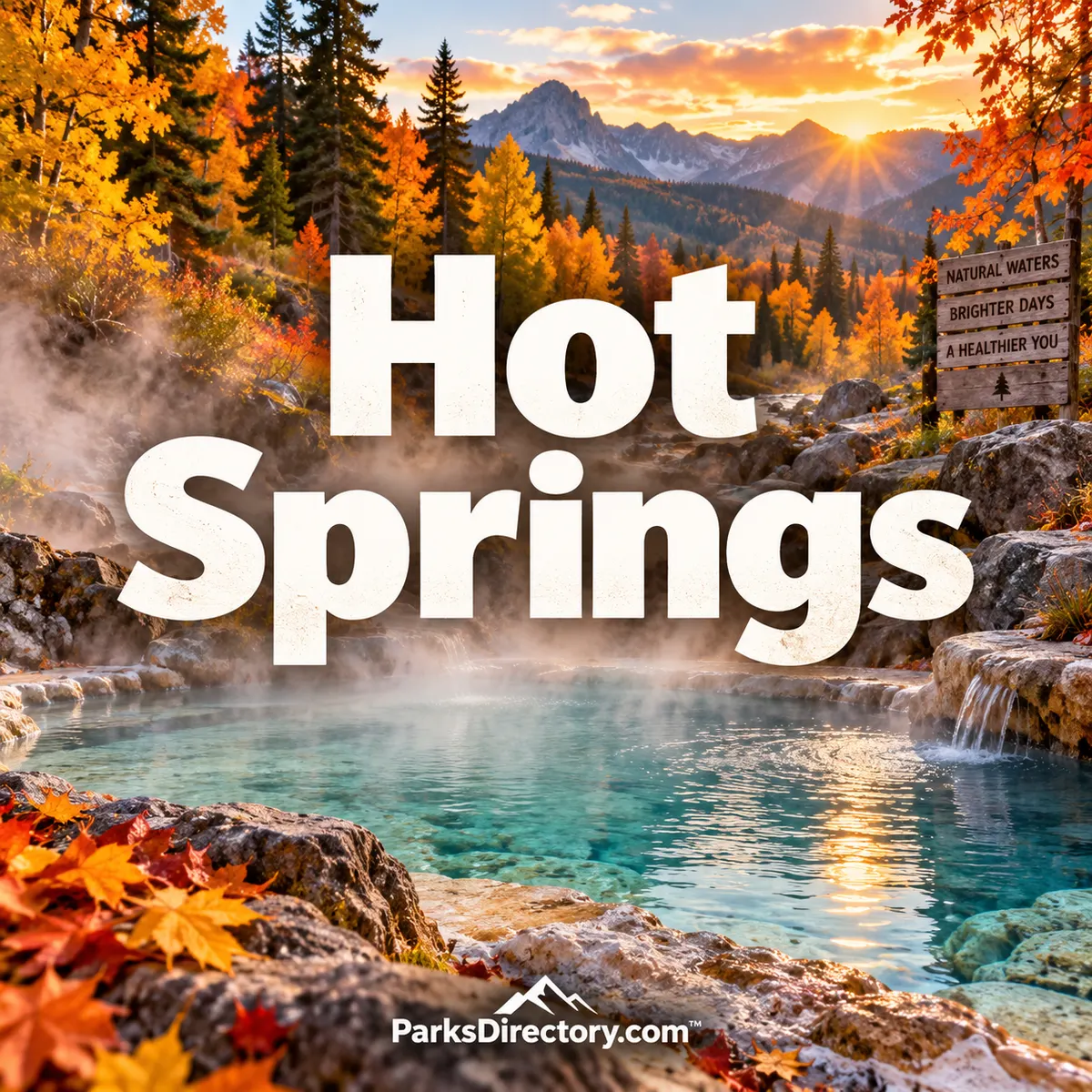
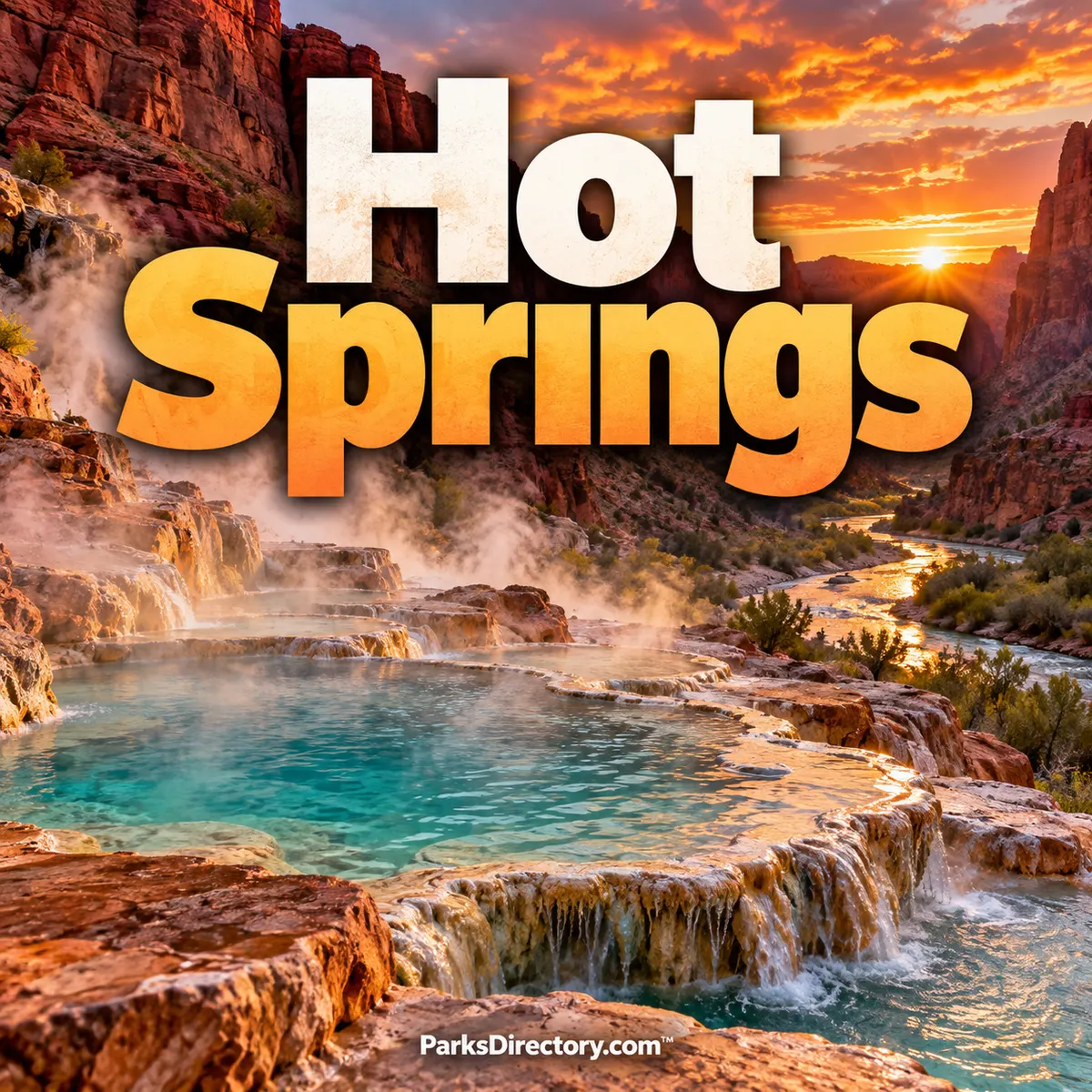
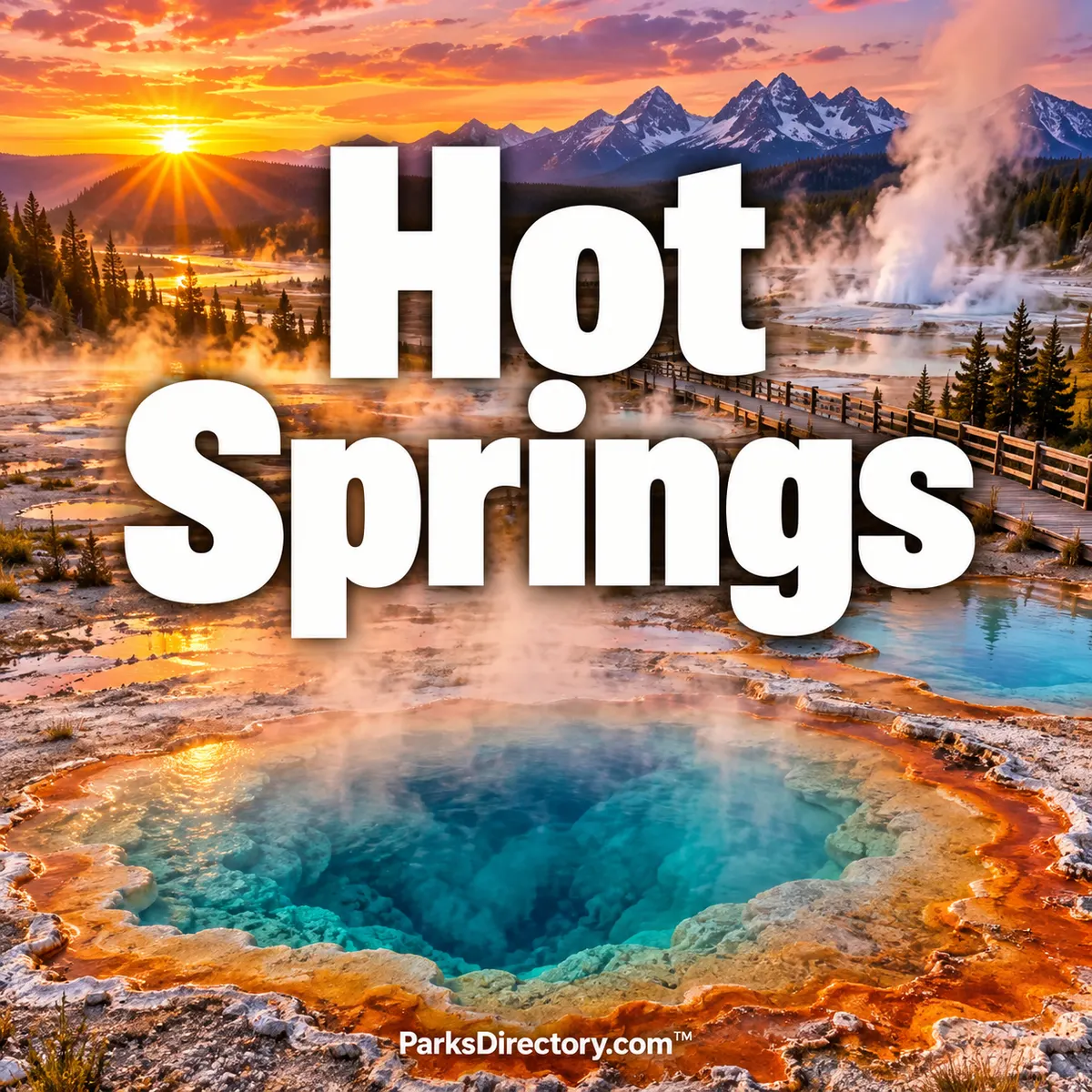
Yellowstone illustrates a different geothermal setting. There, the USGS connects the hydrothermal system with heat from the underlying volcanic system. That contrast is useful because photographs can make very different features look deceptively similar. Water color, an attractive pool, or rising steam cannot establish whether a location is suitable or legal for soaking.[2]
For travelers, the geological story adds interest without creating a need to become an expert. Ask where the water originates, how it reaches a bathing pool, and who manages its use. A developed facility may cool and control the water before visitors enter it. The experience should be evaluated through the operator’s information, not through assumptions about what the word “natural” guarantees.
The history of hot springs in the United States
American hot springs history began long before resort construction. At the Arkansas site now protected as a national park, the National Park Service describes thousands of years of Indigenous activity, including quarrying novaculite for tools. That evidence is a reason to respect specific tribal histories rather than attach a generic claim about ancient healing rituals to every thermal destination.[3]
Federal interest developed early. The Dunbar-Hunter expedition visited the Arkansas springs in 1804, and a settlement grew to serve people seeking the waters. On April 20, 1832, President Andrew Jackson signed legislation creating Hot Springs Reservation. The reservation was a significant early protection measure, but it was not yet a national park under the designation used today.[3:1]
The area received national park status in 1921. This resolves a frequent historical confusion: Hot Springs has a federal protection history older than Yellowstone’s, while Yellowstone was established as the first U.S. national park in 1872. The two statements describe different legal milestones, not competing versions of the same event.[4]
Bathhouse development subsequently turned the Arkansas springs into a major American spa destination. The park’s history documents increasingly elaborate buildings, water-delivery infrastructure, and services for visitors. The springs became part of a town’s economic and architectural identity, showing how a natural feature could organize an entire visitor experience around lodging, bathing, and social life.[3:2]
From health-seeking journeys to contemporary leisure
Historical popularity was closely connected to beliefs about the benefits of mineral bathing. People traveled to spa towns seeking relief and recovery, supporting an industry that extended well beyond a pool. Those historical motivations are important to the story, but they are not evidence that a modern soak treats a disease. Heritage interpretation and current medical advice belong in different categories.[3:3]
Today’s hot springs visitor may be seeking relaxation, scenery, a historic bathhouse, or a stop within a longer road trip. Contemporary U.S. directories distinguish numerous kinds of facilities and locations, including developed resorts and other soaking destinations. That variety demonstrates the category’s continuing travel appeal without establishing a reliable national count of hot springs visitors.[5]
Popularity is therefore best described carefully. A resort’s guest total, a national park’s recreation visits, and the number of thermal features are different measurements. Visitors to a park may never enter a bathhouse, and a geological inventory may include inaccessible or unsafe features. Combining those figures would produce an impressive-sounding number with little practical meaning.
The enduring appeal is easier to explain than to reduce to a single statistic. Hot springs encourage a slower kind of trip, focused on the setting and the time spent there rather than the number of attractions completed. That is an interpretation of the visitor experience, not a claim that every destination offers privacy, solitude, or the same level of service.
Where American hot springs travel fits
A USA hot springs itinerary can combine geology, historic architecture, and recreation rather than treating every stop as an identical bath. Arkansas offers a particularly strong connection between thermal water and preserved spa history. Western destinations provide opportunities to compare different landscapes and facility types. Use a location-based directory to narrow the search, then investigate each operator and access arrangement individually.[3:4][5:1]
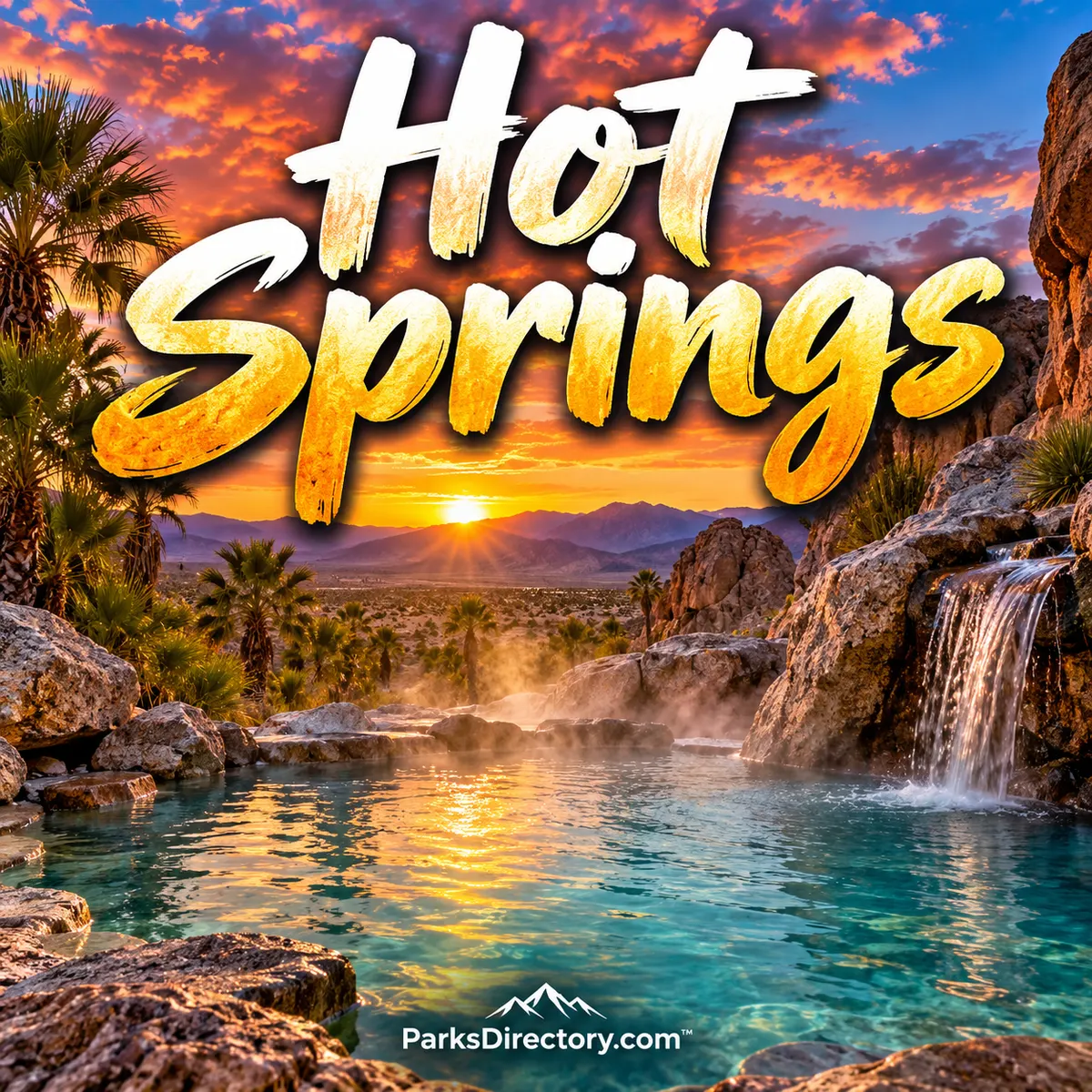
Decide first whether the priority is a managed soaking experience or viewing thermal landscapes. Those are not substitutes for one another. A traveler looking for changing rooms, controlled pools, and a reserved session should research a developed facility. Someone interested in geothermal formations should investigate designated viewing routes and interpretation rather than looking for a place to enter the water.
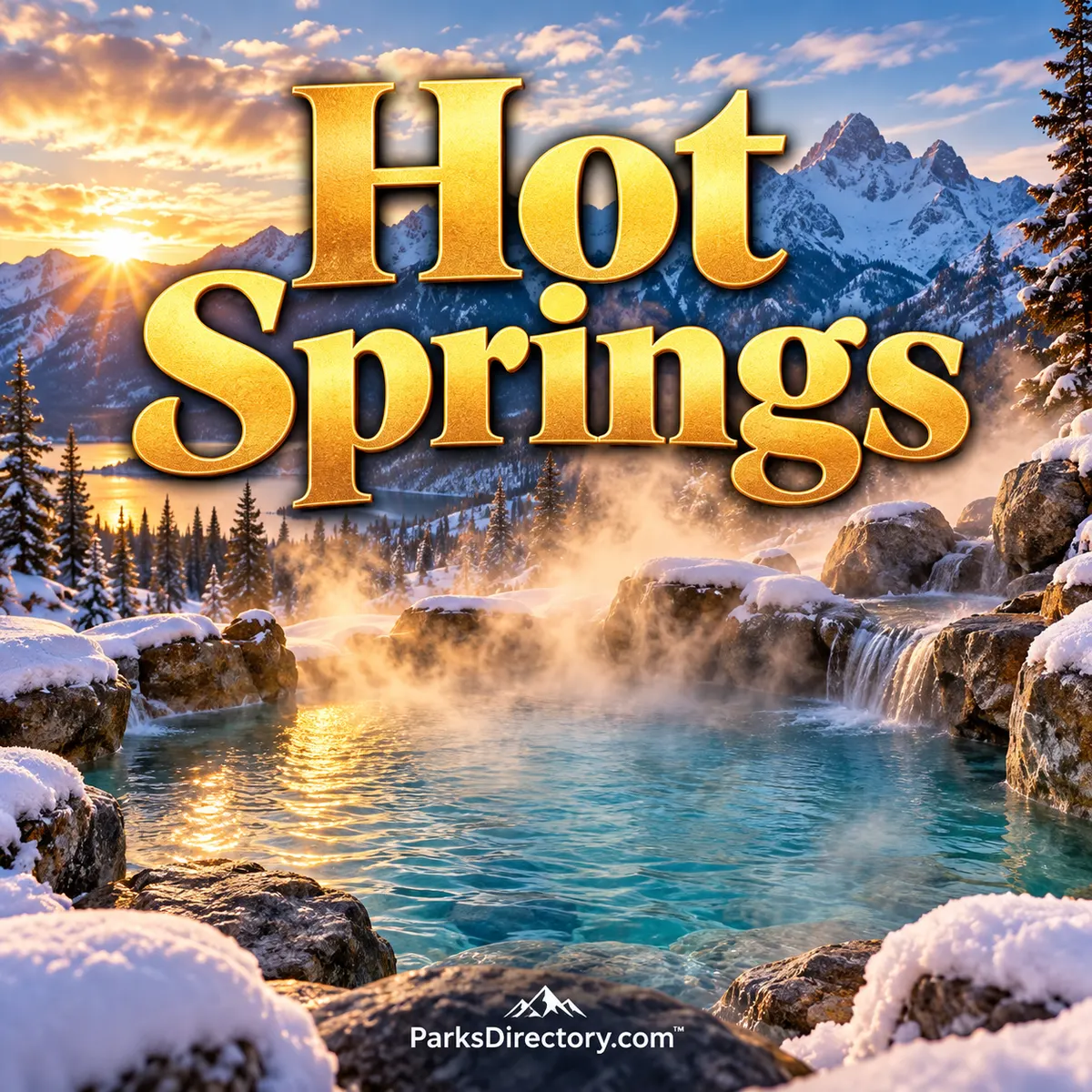
Time of year also affects the whole trip, not merely the appeal of warm water. Consider the route, daylight, available services, and the group’s comfort with outdoor conditions. A scenic image taken in one season cannot answer whether the approach will suit the same traveler in another. Keep the itinerary flexible enough to choose a safer or more comfortable alternative.
Safety and access come before the photograph
Yellowstone’s official guidance is unambiguous: soaking in its hot springs is prohibited. Visitors must stay on designated routes around thermal features and avoid touching the water or runoff. These are not merely courtesy requests; they address dangerous temperatures and fragile geothermal environments. A photograph of someone entering a pool does not establish permission or safety.[6]
There are also health considerations at natural warm-water locations where bathing is allowed. The Centers for Disease Control and Prevention advises keeping the head above water in hot springs because water entering the nose can expose a person to Naegleria fowleri. Infection is rare but extremely serious. Follow current public-health guidance and the facility’s instructions rather than relying on the appearance of the water.[7]
Do not use this category as a substitute for individualized medical advice. Travelers with health conditions or concerns about heat exposure should discuss the activity with an appropriate clinician. Operators can explain their facilities, temperatures, and procedures, but a historic reputation or mineral description should not be treated as a promise of treatment or a cure.
Access also requires attention to ownership and stewardship. Confirm that the destination welcomes visitors, whether booking is required, and which areas are actually open. Respect closures and do not modify water channels or build improvised pools. The goal is to enjoy an authorized experience without changing the conditions for other visitors, nearby residents, or the resource itself.
The economic impact of hot springs in the USA
Hot springs can support local jobs through lodging, pool operations, maintenance, hospitality, food service, guiding, and heritage interpretation. The Arkansas bathhouse district offers a historical example of this relationship between water and a surrounding visitor economy. Modern operators may combine several services, but their economic role should be evaluated at the destination level rather than inferred from the size of the worldwide wellness industry.[3:5]
A realistic assessment begins with both spending and costs. Guests may stay overnight and purchase goods locally, while operators must manage buildings, water systems, staffing, and other infrastructure. Public destinations can face additional demands on parking, sanitation, and emergency services. Those commitments help explain why visitor growth is not automatically an uncomplicated financial gain.
The distribution of benefits matters as well. A small locally operated lodging business may experience tourism differently from a large resort retaining most visitor purchases on site. A good destination strategy would ask how independent businesses participate, whether residents retain reasonable access, and how the thermal resource is protected. Those questions are more useful than assuming a precise return for every additional visitor.
Travelers can contribute by choosing an appropriate base and spending enough time to understand the place. A heritage walk, a locally provided meal, and a responsibly managed soak can form a coherent visit. There is no need to rush between numerous springs when the experience is meant to reward attention and rest.
The future of American hot springs
The future should emphasize responsible management of water and access. A thermal destination depends on more than the visible pool: it requires a functioning source, suitable infrastructure, and a landscape capable of supporting visitation. Operators and land managers should evaluate changes to capacity against those foundations rather than treating demand alone as permission to expand.
Clearer information would also improve the category. Visitors need to know whether a listing describes a viewing attraction, a commercial bathing facility, or another type of location. Accurate access details, transparent charges, and specific accessibility information can prevent a disappointing or inappropriate trip. Good interpretation should explain geology and history without dressing old health claims in modern marketing language.
Begin your search with ParksDirectory™, then verify the destination through its official operator or land manager. American hot springs are most rewarding when approached as places with distinct histories and conditions, not interchangeable promises of relaxation. A responsible visit protects the resource while allowing time to appreciate the remarkable journey that brings warm water to the surface.
Sources
U.S. Geological Survey, “Hydrology of Hot Springs National Park.” https://www.usgs.gov/geology-and-ecology-of-national-parks/hydrology-hot-springs-national-park ↩︎
U.S. Geological Survey, “Hydrothermal Monitoring at Yellowstone National Park.” https://www.usgs.gov/volcanoes/yellowstone/science/hydrothermal-monitoring-yellowstone-national-park ↩︎
National Park Service, Hot Springs National Park, “History & Culture.” https://www.nps.gov/hosp/learn/historyculture/index.htm ↩︎ ↩︎ ↩︎ ↩︎ ↩︎ ↩︎
National Park Service, “Quick History of the National Park Service,” and Hot Springs park history. https://www.nps.gov/articles/quick-nps-history.htm ; https://www.nps.gov/hosp/learn/historyculture/index.htm ↩︎
Hot Springs of America, “Hot Springs Locator.” https://hotspringsofamerica.com/hot-springs-locator/ ↩︎ ↩︎
National Park Service, Yellowstone, “Swimming” and “Geysers & Hot Springs.” https://www.nps.gov/yell/planyourvisit/swimming.htm ; https://www.nps.gov/yell/planyourvisit/thermal-basin-exploring.htm ↩︎
Centers for Disease Control and Prevention, “Preventing Brain Infection When Swimming.” https://www.cdc.gov/naegleria/prevention/swimming.html ↩︎